

Safety
Is Bitwarden Safe? Permissions, Privacy and Ownership Checked

Safety
Is Bitwarden Safe? Permissions, Privacy and Ownership Checked
On this page
- The short answer
- Is Bitwarden safe to use in 2026?
- How does Bitwarden protect your vault?
- What permissions does the Bitwarden Chrome extension ask for?
- Has Bitwarden ever been hacked?
- Who owns Bitwarden, and what was the controversy?
- What data does Bitwarden collect about you?
- How do you make Bitwarden safer? Seven settings to change
- Is Bitwarden safer than 1Password, LastPass or Chrome?
- Which extensions pair well with Bitwarden?
- Frequently asked
The short answer
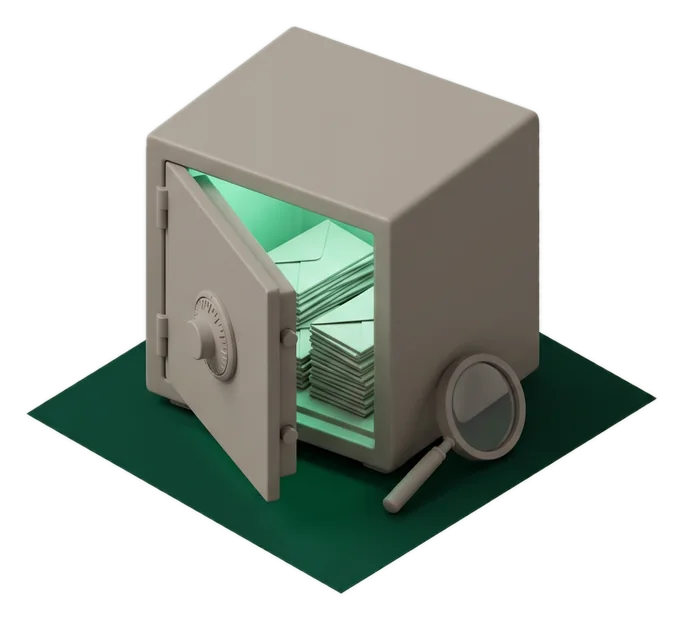
Yes, Bitwarden is one of the safer password managers you can use. Your vault is encrypted on your device before it syncs, so Bitwarden's servers only hold scrambled data. The code is open source and independently audited, and no breach of stored vaults has been disclosed. Your master password and 2FA settings matter most.
Is Bitwarden safe to use in 2026?
Bitwarden is safe for most people, including for banking and email logins, provided you pick a strong master password and turn on two-step login. The design means a stolen copy of Bitwarden's database would still be unreadable without your master password.
Three things put it ahead of most rivals on trust. The client and server code is published on GitHub, so anyone can inspect it. Bitwarden commissions third-party security audits and publishes the results. And you can host the whole service yourself if you would rather not rely on Bitwarden's cloud at all.
The realistic risks sit on your side of the screen: a weak or reused master password, a phishing page that copies the Bitwarden login, malware on your computer, or a browser full of extensions you no longer need. This guide walks through each of those, plus the extension's permissions and the company behind it. For our general rules on judging add-ons, see how to tell if a Chrome extension is safe.
| Question | Short answer |
|---|---|
| Can Bitwarden read my passwords? | No. Encryption and decryption happen on your device. |
| Is the code public? | Yes. Clients and server are open source on GitHub. |
| Has a vault breach been disclosed? | No, not as of September 2026. |
| Is it independently audited? | Yes, with reports published on bitwarden.com. |
| Biggest risk to you | A weak master password or a phishing page. |
How does Bitwarden protect your vault?
Bitwarden uses end-to-end, zero-knowledge encryption: your master password is turned into an encryption key on your device, and only encrypted data ever leaves it. Bitwarden never receives your master password, which is also why it cannot reset it for you.
Vault items are encrypted with AES-256. The step that turns your master password into a key is called the key derivation function (KDF), and Bitwarden lets you choose between PBKDF2 and Argon2id. Both are deliberately slow, which makes guessing attacks against a stolen vault expensive. Argon2id is the stronger option against attackers using graphics cards.
- Zero-knowledge
- The server stores your vault but has no key to open it. Staff, hosting providers and anyone who steals the database see only ciphertext.
- Master password
- The one secret that unlocks everything. It is never sent to Bitwarden in usable form, so a forgotten master password means a lost vault unless you set up emergency access or account recovery in an organisation.
- KDF iterations
- How much work it takes to test one password guess. Higher settings slow down attackers but also slow unlocking on older phones.
- Two-step login
- A second factor at sign-in: an authenticator app, email code, or a hardware security key. It protects the account, not the encryption itself.
The technical details are laid out in the Bitwarden security white paper. The short version: the strength of your vault equals the strength of your master password multiplied by the KDF cost. A long passphrase of four or more random words does more for your safety than any other single choice.
The one setting worth checking today
Open the web vault, go to Settings > Security > Keys and confirm the KDF algorithm. Older accounts may still be on PBKDF2; switching to Argon2id re-encrypts your key and logs out your other devices, so do it when you have them to hand.
What permissions does the Bitwarden Chrome extension ask for?
The Bitwarden extension asks to read and change data on all websites, because it has to spot login forms anywhere and fill them. That sounds alarming, but it is the same access every autofilling password manager needs, including 1Password.
The list below explains the permissions a Bitwarden install typically shows and why each exists. Exact wording can change between versions, so check your own copy at chrome://extensions > Bitwarden > Details > Site access and Permissions. Our Chrome permissions glossary covers each warning in more depth.
| What Chrome shows | What Bitwarden uses it for | Risk if abused |
|---|---|---|
| Read and change all your data on all websites | Detecting username and password fields and filling them on the correct site | High in theory; this is the permission that makes any password manager a target |
| Read and modify data you copy and paste | Copying a password or 2FA code and clearing the clipboard after a set time | Medium; clipboard contents can include other secrets |
| Display notifications | Prompting you to save or update a login | Low |
| Change your privacy-related settings (optional) | Turning off Chrome's own password manager so the two do not compete | Low; only requested if you choose it |
| Communicate with cooperating native applications (optional) | Unlocking with Windows Hello or Touch ID through the desktop app | Low; talks only to the installed Bitwarden app |
| Tabs, context menus, storage, idle and alarms | Knowing which site you are on, the right-click fill menu, caching your encrypted vault, and locking after inactivity | Low |
What makes broad site access acceptable here is who holds it and whether you can see what they do with it. Bitwarden's extension code is public, it follows Manifest V3, and the vault it caches locally stays encrypted until you unlock it. If you want Bitwarden to fill only when asked, restrict it in Site access to On click, at the cost of the save-login prompts appearing less reliably.
Watch for lookalikes
Install only the listing published by Bitwarden Inc. Search results and ads have in the past pointed to copycat sites imitating the Bitwarden web vault. Our Bitwarden extension profile links the correct Web Store listing.
Has Bitwarden ever been hacked?
No. Bitwarden has not disclosed any breach of its servers or of customer vaults as of September 2026. There have been reported weaknesses and phishing campaigns, which is different from attackers getting into stored data.
The notable episodes are worth knowing because they show where the real risks lie:
- Autofill in embedded frames (2023): researchers showed that with the optional 'autofill on page load' setting switched on, credentials could be filled into an iframe from a different domain on a page. Bitwarden changed how the extension handles cross-domain frames. Auto-fill on page load has always been off by default.
- Malicious search ads (2023): fake ads led to phishing copies of the Bitwarden web vault that tried to capture master passwords. Nothing at Bitwarden was compromised; users who typed the address or used a bookmark were unaffected.
- Researcher-reported bugs: issues such as a flaw in how the desktop app stored a key used for Windows Hello unlock were reported through Bitwarden's public bug bounty and patched.
Compare that with LastPass, where attackers took encrypted vault backups in 2022. That incident is the main reason many people now search for a safer option; our Bitwarden vs LastPass comparison covers the practical differences if you are switching.
Breach-proof is not the goal
Assume any cloud service could one day lose its database. With Bitwarden, what an attacker would get is ciphertext, so the question becomes how long your master password would hold up. That is why the passphrase and KDF advice above matters more than any headline.
Who owns Bitwarden, and what was the controversy?
Bitwarden is made by Bitwarden, Inc., a US company based in Santa Barbara, California, founded by developer Kyle Spearrin. It has taken outside funding, with PSG and Battery Ventures among its investors, but it remains an independent company rather than part of a larger software group.
The best-known controversy came in late 2024, when a new internal SDK dependency in the Bitwarden clients carried a licence that was not compatible with the GPL. Open-source users worried the clients were drifting away from being free software. Bitwarden said the change was a packaging problem, adjusted the licensing so the clients could still be built under the GPL, and stated that its core clients would remain open source.
The episode did not affect security, but it is a fair reminder that investor-backed companies can change terms. Two safeguards limit the impact. Your data exports in plain JSON or CSV, so leaving is easy. And there is an unofficial compatible server, Vaultwarden, that the community maintains for self-hosters.
Does NASA use Bitwarden?
We could not find a public, verifiable statement from NASA or Bitwarden confirming it. Claims like this circulate on forums, but they are not a reason to trust a password manager either way. Audits, open code and your own settings are better evidence.
What data does Bitwarden collect about you?
Bitwarden stores your email address, account and billing details, and your encrypted vault. It cannot see the websites, usernames or passwords inside the vault, because vault items, including their names and URLs, are encrypted before upload.
Some metadata is unavoidable for any sync service: when you log in, from which device type and IP address, and how large your vault is. Bitwarden's Security FAQs describe what it can and cannot access. You can also choose where your data lives: Bitwarden runs a US cloud and a separate EU cloud, and you pick the region when you create the account.
- Maximum control: self-host the official Bitwarden server on your own hardware. You take on patching, backups and uptime.
- Data residency: create the account on the EU cloud if your organisation needs data kept in Europe. Moving between regions means exporting and re-importing.
- Minimal footprint: the free plan works with just an email address and master password; no phone number is required.
Compared with the built-in Chrome password manager, the key privacy difference is independence from your Google account. If that account is compromised or locked, Bitwarden is unaffected, and Bitwarden has no advertising business drawing on your data.
How do you make Bitwarden safer? Seven settings to change
The defaults are reasonable, but ten minutes in the settings closes the most common gaps. Do these in order; the first two matter most.
- Use a passphrase master password. Four to six random words, never used anywhere else. Change it in the web vault under
Settings>Security>Master password. - Turn on two-step login. In the web vault go to
Settings>Security>Two-step login. An authenticator app is free; a hardware security key (FIDO2) is the strongest option. Save the recovery code offline. - Switch the KDF to Argon2id.
Settings>Security>Keys, as covered above. - Set a vault timeout. In the extension open
Settings>Account security>Vault timeoutand choose a short interval, withLockrather thanLog outif you want PIN or biometric unlock. - Leave auto-fill on page load off. Use
Ctrl+Shift+L(Cmd+Shift+Lon Mac) or the inline menu to fill instead, so nothing fills without your action. - Disable Chrome's built-in manager. Go to
chrome://password-manager/settingsand turn offOffer to save passwordsso two managers do not both hold your logins. - Check URI match detection. Keep the default
Base domainfor most sites; useHostfor logins that must not fill on sibling subdomains.
Premium users also get vault health reports that flag reused, weak and exposed passwords. Free users can still run Bitwarden's data breach report from the web vault's Reports section.
Is Bitwarden safer than 1Password, LastPass or Chrome?
Bitwarden and 1Password are both strong choices with different trade-offs; LastPass carries more history, and Chrome's own manager is convenient but tied to your Google account. The table compares them on safety factors rather than features.
| Factor | Bitwarden | 1Password | Chrome password manager |
|---|---|---|---|
| Open-source clients | Yes | No | Chromium is open source; sync service is Google's |
| Extra secret beyond master password | No (optional 2FA) | Yes, a Secret Key | Uses Google account; optional on-device encryption |
| Self-hosting | Yes | No | No |
| Free plan | Yes, unlimited devices | No | Yes |
| Works outside Chrome | All major browsers and apps | All major browsers and apps | Chrome and Android mainly |
1Password's Secret Key means a stolen vault is useless even with a weak master password, which is a real advantage for people who will not use a long passphrase. Bitwarden's advantage is transparency and cost. Our Bitwarden vs 1Password comparison goes deeper, and the password manager hub lists every option we track.
Which extensions pair well with Bitwarden?
A password manager is only as safe as the browser around it. Fewer extensions with broad access is the goal, so add companions only where they close a specific gap: two-factor codes, malicious redirects that lead to phishing pages, and leftover browsing data on shared computers.
Picks that work alongside Bitwarden
-
BitwardenFreemium
Security & Privacy
The subject of this guide: open source, audited, free for unlimited devices. Catch: no Secret Key, so your master password does all the work.
-
1PasswordPaid
Security & Privacy
The main paid alternative, with a Secret Key that protects weak master passwords. Catch: closed source and no free plan.
-
AuthenticatorFree
Security & Privacy
Generates 2FA codes in the browser if you do not want them inside Bitwarden. Catch: keeping codes in the same browser as passwords weakens the separation 2FA is meant to give.
-
Security & Privacy
Blocks the malicious ads that have pushed fake Bitwarden login pages. Catch: some filtering is less flexible under Manifest V3.
-
Redirect BlockerFree
Security & Privacy
Stops scripted redirects that can land you on a phishing copy of a login page. Catch: a small number of legitimate sign-in flows rely on redirects.
-
Security & Privacy
Clears history, cache and cookies on a schedule, useful on shared machines. Catch: it will also sign you out of sites.




For more reviews in this series, see is uBlock Origin safe and is NordVPN safe, or browse the security and privacy category. Our scoring approach is explained on the methodology page.
Extensions mentioned in this guide
- BitwardenOpen-source password manager.
- 1PasswordPassword manager for families and teams.
- AuthenticatorGenerates two-factor (2FA) verification codes for your online accounts
- uBlock Origin LiteLightweight Manifest V3 content blocker.
- Redirect BlockerStops malicious and annoying auto-redirects before they hijack your browsing.
- Auto History WipeAutomatically clears browsing history, cache, and cookies on a schedule or on startup
Frequently asked
Is Bitwarden safe for bank accounts?
Yes. Bank logins are protected by the same end-to-end encryption as everything else in your vault. Add two-step login to both Bitwarden and your bank for the best protection.
Can Bitwarden employees see my passwords?
No. Your vault is encrypted on your device with a key derived from your master password, which Bitwarden never receives. Staff can see account details such as your email address, not vault contents.
What happens if Bitwarden's servers are breached?
Attackers would get encrypted vaults that need your master password to open. A long, unique passphrase and the Argon2id KDF make that practically infeasible to crack.
Is Bitwarden open source?
Yes. The browser extension, desktop and mobile apps and the server are published on GitHub. A 2024 licensing dispute over an internal SDK was resolved with Bitwarden restating that its clients remain open source.
Why does the Bitwarden extension need access to all websites?
It has to detect login forms on any site you visit so it can offer to fill or save credentials. You can limit it to On click in chrome://extensions if you prefer.
Is Bitwarden free really safe or is premium more secure?
The free plan uses the same encryption as premium. Premium adds extras such as vault health reports, file attachments and a built-in TOTP generator, not stronger security.
Should I store 2FA codes in Bitwarden?
It is convenient but puts both factors in one place. For email and banking, keeping 2FA codes in a separate authenticator app or hardware key is safer.
Is Bitwarden safer than Chrome's built-in password manager?
For most people, yes. Bitwarden is independent of your Google account, works across every browser and lets you choose your KDF, while Chrome's manager depends on your Google account security.
Is Bitwarden safe according to Reddit?
Security-focused communities generally recommend Bitwarden for its open code and audits. The common complaints are about autofill polish and interface, not safety.
Can Bitwarden recover my account if I forget my master password?
No. Because of zero-knowledge design it cannot reset or recover your master password. Set up emergency access or keep a password hint and recovery code in a safe place.
Where is Bitwarden data stored?
On Bitwarden's US or EU cloud, depending on which region you signed up in, or on your own server if you self-host. The data is encrypted either way.
Is it safe to use Bitwarden on a shared computer?
Only with care. Use a short vault timeout set to Log out, never save the master password in the browser, and clear browsing data when you finish.